.jpg)
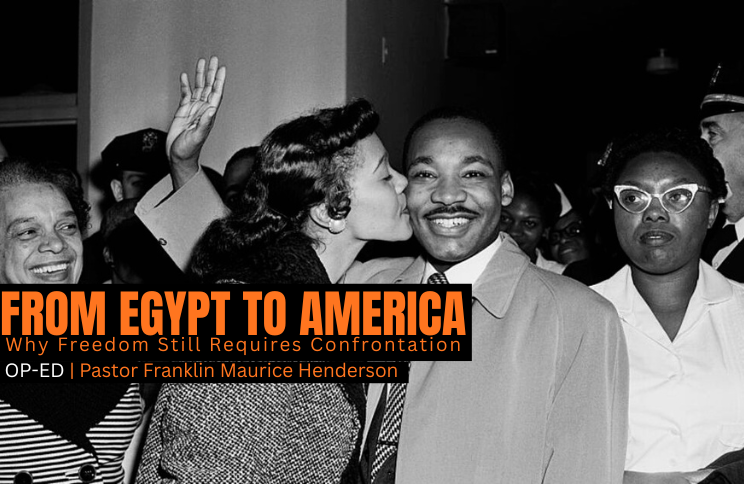
Every year on Martin Luther King Jr. Day, we get better at remembrance and worse at resolve. We can recite the lines. We can cue the footage. We can post the quotes. We have learned how to honor King in a way that costs us nothing.
That is the bargain we keep trying to make with history: celebrate the man while avoiding the disturbance he brought.
King was not only a dreamer. He was an agitator for the good. A holy inconvenience. He did not tiptoe around the conscience of a nation. He pressed on it until it spoke.
Long before King faced microphones and police lines, Moses faced a throne. He did not come to Pharaoh with a mood board or a gentle appeal. He came with a demand that left no room for negotiation: let my people go. It was plain. It was direct. It was confrontation dressed in obedience.
Different centuries, same ground. Both men stood where power hates to see anyone standing: face to face with injustice.
Moses confronted an empire that did not pretend to be virtuous. Pharaoh did not hide behind slogans. Slavery was not softened with polite language. Chains were seen. Whips were heard. The cruelty did not blush.
King confronted something slipperier and, in some ways, more lethal. He confronted a nation that preached liberty while rationing it. An America that sang about freedom while building fences around it. America did not deny its ideals. It denied the gap between its ideals and its behavior. And denial is harder to break than iron.
Moses led people out. King fought to bring people in, into a promise already written down but not fully lived out. One story is exodus. The other is inclusion. Both demanded courage. Both demanded sacrifice. Both demanded pressure.
And neither man was celebrated while he was doing the work.
Moses faced Pharaoh’s resistance, but he also faced the complaints of the people he was trying to liberate. When freedom required responsibility, some longed for the predictability of bondage. King met the same heartbreak. He faced open racists, yes, but he also faced the respectable opposition of the moderate, the one who prefers quiet over justice and “peace” over truth.
That is the lesson we keep trying to edit out every January: freedom makes noise.
Moses applied pressure through divine disruption, a series of judgments that made oppression expensive to maintain. King applied pressure through disciplined nonviolence, through marches and boycotts and jail cells, and through the steady exposure of what America wanted to keep covered. Different methods. Same reality. Power does not loosen its grip because it suddenly grows a conscience. Power yields when it is pressed.
Then comes the sobering part that Hallmark versions never include: neither man lived to watch the full completion of what he fought for.
Moses saw the Promised Land and died short of it. King spoke about the mountaintop with the clear-eyed knowledge that he might not reach it. Great leadership is often measured less by arrival and more by obedience. Calling does not guarantee closure.
So what does that mean for us now?
It means that praising King while refusing to continue the work is empty theater. It means we cannot admire Moses while resisting modern deliverance. Every generation has its Egypt, not always with bricks and whips, but with systems, policies, and habits of mind that thrive on delay. Those systems always preach patience to the oppressed, as if time itself is justice.
Time is not justice.
Justice moves when people move it.
If we want to honor Martin Luther King Jr., we have to stop shrinking him into a safe symbol. We have to remember him as a man who demanded that America live up to its own promised confession. If we want to learn from Moses, we have to admit that God still calls leaders to disturb comfort, not protect it.
Freedom is not a holiday.
Justice is not automatic.
Deliverance still costs something.
The question is not whether we remember these men.
The question is whether we are willing to stand where they stood.